FIDE Candidates 2026: players, storylines, and what matters
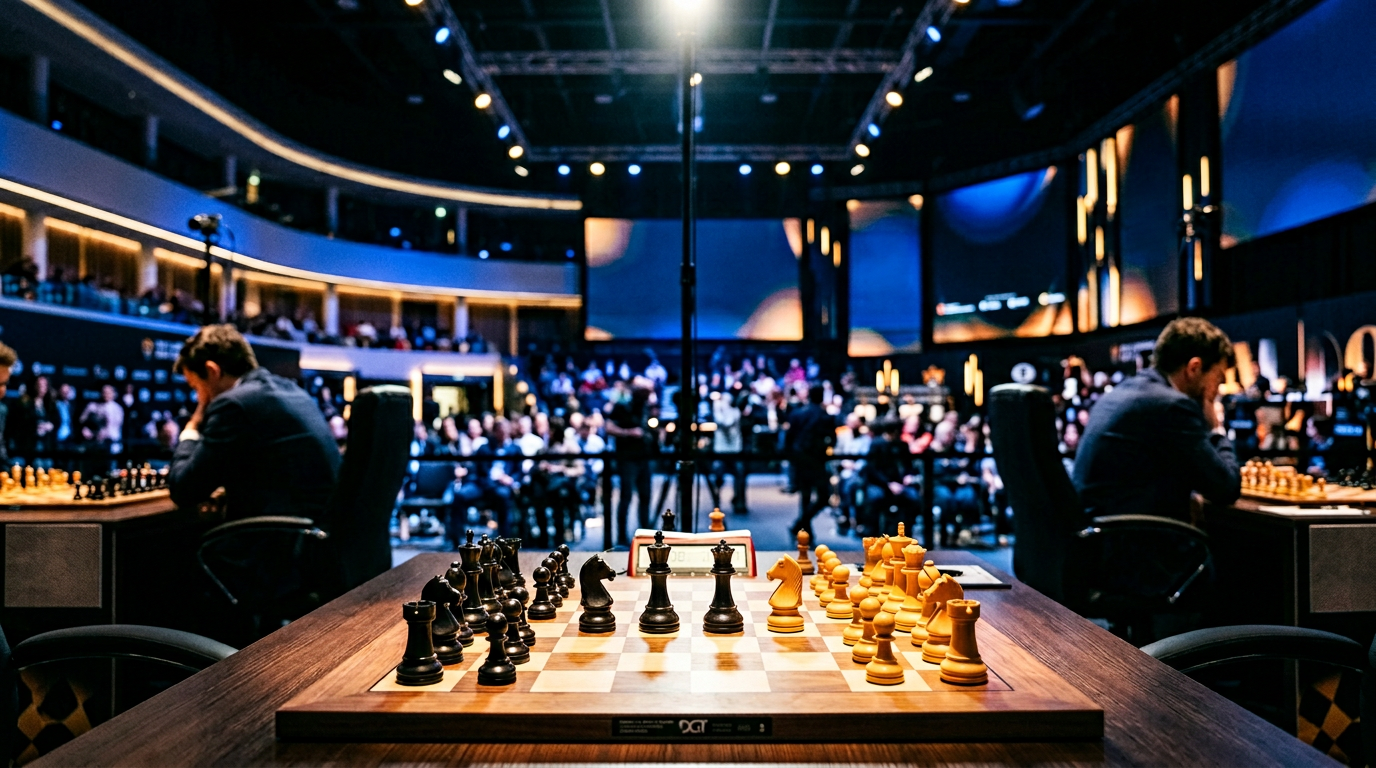
The FIDE Candidates Tournament 2026 is the event every serious chess fan is watching this month, because it decides who earns the right to challenge world champion Gukesh D in the next title match.
More than almost any other tournament, this one changes careers, shapes the story of elite chess, and turns every round into something bigger than just another result.
This year’s tournament is being played in Paphos, Cyprus, from March 28 to April 16, 2026, with eight players competing in a double round-robin. That sounds simple enough, but in practice it creates one of the toughest formats in chess: long games, repeated matchups, constant preparation, and almost no room to mentally switch off.
What makes the 2026 edition especially interesting is that it does not feel locked up by one overwhelming favorite. The field mixes experienced stars, proven elite names, and younger contenders who are no longer just “ones to watch,” but real candidates to win the whole thing. That is why this tournament already feels alive, tense, and genuinely open.
Why the Candidates matters so much
In modern chess, there are many important events, but very few carry the same direct consequence as the Candidates. The winner does not just take a title or a prize fund; the winner becomes the official challenger in the World Championship cycle. That is the reason the tournament has a different emotional weight from almost anything else on the calendar.
At a normal elite event, a strong finish can still feel successful even without first place. In the Candidates, the gap between winning and not winning is enormous. First place means a chance to play for the world title, while even an excellent second place can quickly be remembered as a missed opportunity.
That pressure changes the chess. Players are not only trying to play well; they are trying to survive two weeks of intense preparation, emotional swings, and standings pressure while knowing that every half-point matters. It is exactly the kind of environment where technical skill, nerves, recovery, and timing all matter at once.
What the tournament is
The Candidates Tournament is organized by FIDE as the final stage before the World Championship match. In 2026, it serves one clear purpose: deciding who will face reigning champion Gukesh D.
This year’s field has eight players, and that smaller, more selective structure is part of what makes the event so compelling. Every participant has already earned the right to be there through major qualification paths, so there are no easy games and no harmless pairings. Every round matters because everybody in the room is strong enough to damage a favorite’s campaign.
That also makes the event great for readers who want both news and insight. You are not just following scores; you are following a race where every decision could shape the next world title match.
Format, scoring and schedule
The format is a double round-robin with eight players and 14 rounds in total. Each player faces every other player twice, once with White and once with Black, which gives the tournament a strong sense of balance and fairness.
The scoring system is standard:
Win: 1 point.
Draw: 0.5 points.
Loss: 0 points.
What is not standard is the pressure created by that structure. In a Swiss tournament, one bad day can sometimes be repaired more quietly, but in the Candidates every result is magnified because the field is small and the margins are thin. A single missed win can matter just as much as a painful loss if the standings stay close until the final rounds.
The event is scheduled from March 28 to April 16 in Paphos, Cyprus. That means the tournament is unfolding right now in early April, right in the middle of one of the busiest stretches of the chess calendar.
Players to know
FIDE’s official preview lists the eight players as Hikaru Nakamura, Fabiano Caruana, Wei Yi, Anish Giri, Javokhir Sindarov, Praggnanandhaa R, Matthias Bluebaum, and Andrey Esipenko. It is a field with very little dead weight and a lot of personality, which is one reason the tournament feels so watchable.
Fabiano Caruana
Caruana remains one of the most natural favorites because he combines elite preparation, deep calculation, and extensive Candidates experience. FIDE notes that he qualified by winning the 2024 FIDE Circuit and that this is his fifth Candidates appearance, which immediately tells you he knows how this event feels from the inside.
He is the kind of player who rarely needs chaos to score points. If he gets control of a position, he often squeezes it with patience rather than forcing things too early. In a 14-round event, that style can be extremely effective.
Hikaru Nakamura
Nakamura comes in as one of the strongest practical players in the field. FIDE’s preview says he qualified through the rating spot and entered the event as world number two on the March 2026 rating list.
What makes him so dangerous is not just raw strength, but adaptability. He can handle messy positions, uncomfortable defenses, and fast decision-making moments better than almost anyone. In a tournament where not every game will stay clean or controlled, that matters a lot.
Anish Giri
Giri qualified by winning the 2025 FIDE Grand Swiss in Samarkand, according to FIDE’s preview. He has long been associated with precision and strong opening work, but the interesting part now is that he has also become a more ambitious competitor when the moment calls for it.
That evolution is important in the Candidates. Pure solidity is never enough on its own, but controlled ambition can carry a player a long way in a field this balanced.
Wei Yi
Wei Yi enters with one of the most intriguing profiles in the tournament. FIDE describes him as China’s top player, says he qualified as the 2025 Goa World Cup finalist, and highlights his long-standing reputation as a hugely gifted attacking talent.
He is the kind of player who can change the rhythm of an event. In a field where many games begin with heavy preparation, a player with genuine tactical creativity can force others out of comfort earlier than they would like.
Praggnanandhaa and Sindarov
Praggnanandhaa and Javokhir Sindarov represent the younger edge of the tournament. FIDE says Praggnanandhaa qualified through the 2025 FIDE Circuit, while Sindarov qualified by winning the 2025 World Cup.
What they bring is more than youth. They bring modern preparation, confidence against top opposition, and the feeling that they are entering the event to compete, not to learn. That is a dangerous combination in a field where reputation alone does not win points.
Bluebaum and Esipenko
Matthias Bluebaum and Andrey Esipenko may attract less attention in mainstream coverage, but that does not make them harmless. FIDE says Bluebaum qualified via second place in the 2025 Grand Swiss, while Esipenko qualified through third place in the 2025 World Cup.
In a tournament like this, outsiders often become the players who shape everything. They can take points off favorites, influence momentum, and force others into riskier decisions later in the event.
Updates as of April 7, 2026
As of April 7, 2026, the tournament is actively underway in Paphos, and official FIDE channels are continuing to publish Candidates-related coverage during the event window. FIDE’s news page was still posting fresh tournament-related material in early April, and live round coverage published on April 3 confirms that the event had already moved into the first week of games.
Just as importantly, coverage published on April 5 around the Candidates shows that the tournament is fully in motion and still developing, rather than sitting in a pre-event or post-event phase. So from a content perspective, this is exactly the right moment to publish a live-style explainer article: readers are searching for players, schedule, favorites, and tournament direction while the story is still unfolding.
What I want to avoid here is inventing standings or game-by-game results that are not safely confirmed in the material already available.
Based on verified official and event-linked coverage, the honest update is that the Candidates is in progress, rounds are being played, the race is live, and the picture can still change quickly as the tournament moves deeper into April.
How the tournament seems to be unfolding
Even without forcing unverified scoreboard details, we can already say a few important things about how the event is unfolding. First, the simple fact that official live coverage and round-based content are already in circulation tells us the tournament has moved past the opening phase and into the stage where narratives begin to form around momentum, recovery, and pressure.
Second, this is exactly when the Candidates becomes more interesting than a pre-tournament prediction piece. Once rounds are underway, every draw, every practical win, and every missed chance starts to change how readers think about the field. In other words, the event is no longer about who looked strongest on paper, but about who is actually holding up inside the tournament.
Third, this is the stage where favorites usually stop being abstract. Caruana, Nakamura, Giri, Praggnanandhaa, Wei Yi, Sindarov, Bluebaum, and Esipenko all entered with different expectations, but once the rounds begin, the same old Candidates truth returns: psychology and timing matter almost as much as chess strength.
What readers should watch over the next rounds
The smartest way to follow the next phase is not just to check the standings, but to look for patterns. In the Candidates, some players build pressure gradually, others rely on sharp preparation, and others survive difficult moments until the event starts to tilt in their direction.
Here are the main signals worth watching:
Who is consistently getting playable positions from the opening.
Who is taking practical chances instead of settling too early.
Who is recovering well after setbacks.
Who still looks fresh as the rounds add up.
Those details often tell you more than a single result. A player can sit near the top of the standings but look unstable, while another can trail slightly and still appear ready to surge. That is one reason the Candidates remains such a rich event for both fans and analysts.
Why this edition feels so open
This year’s Candidates does not feel dominated by a single giant. There are clear top names, but the field looks balanced enough that several players have believable winning paths.
That openness comes from a few things:
The mix of generations is strong.
Styles are varied, from technical to tactical.
Preparation quality is high across the entire field.
There is no guarantee that experience alone will decide it.
This matters because open tournaments create better content and better drama. Fans do not just want to know who the favorite is; they want to know who is rising, who is wobbling, and who looks mentally strongest after the first serious tests.
What usually decides the Candidates
At first glance, people tend to focus on openings, and that makes sense. At this level, every player arrives with deep engine work, targeted preparation, and carefully chosen lines for specific opponents. But the Candidates is almost never won by opening files alone.
The real difference usually appears after preparation ends. That is when players must solve practical problems over the board, make decisions without perfect clarity, and stay emotionally balanced after long games. This is why a technically brilliant player can still fall short, while a more practical and resilient player keeps collecting points.
The biggest winning factors are usually:
Decision-making in unclear positions.
Emotional recovery after losses or missed chances.
Stamina over the full 14-round schedule.
Good judgment about when to push and when to stabilize.
Use DeepBlunder to review critical moments
Following the Candidates is exciting, but studying it properly is even better. If you want to turn elite games into real improvement, use DeepBlunder to review critical moments, compare candidate moves, track recurring mistakes, and build better opening and middlegame notes from top-level play.
Analyze the Candidates like a player, not just a spectator:
https://www.deepblunder.com/
What club players can learn from this event
One reason this topic works so well for DeepBlunder is that the Candidates is not just newsworthy, but genuinely educational. Elite games in this tournament show how top players handle preparation, uncertainty, fatigue, and tournament pressure all at once.
That gives everyday players a lot to study:
How to transition from opening prep into a real middlegame plan.
How to stay practical when the position gets sharp.
How to defend worse positions without collapsing.
How to think about risk depending on tournament situation.
The lesson is not that club players should imitate every move. The lesson is that they should watch how strong players make decisions when they do not have perfect answers, because that is exactly what practical chess feels like at every level.
Predictions: who is most likely to challenge Gukesh D
Before the event, the most obvious top-tier picks were Fabiano Caruana and Hikaru Nakamura because of their elite status, experience, and practical strength. That still feels like a fair starting point when discussing likely winners, even in a field this deep.
Anish Giri belongs close behind them in any serious prediction conversation. He has the precision, the qualification pedigree, and the kind of maturing style that could be ideal for a long, tense event. If the tournament rewards controlled ambition more than all-out aggression, that could suit him well.
The most dangerous disruptors are probably Praggnanandhaa and Wei Yi, with Sindarov close to that group. Praggnanandhaa offers fearless modern energy, Wei Yi offers tactical firepower, and Sindarov has already shown he can come through major high-pressure qualification paths.
So the most human answer is this: yes, the biggest names remain the safest predictions, but this does not feel like a year where the result is predetermined. The player who ends up challenging Gukesh D will probably be the one who combines preparation, nerve, and emotional steadiness best over the full stretch of the event.
How to follow official updates
For official coverage, readers should rely on FIDE’s World Championship cycle page, the FIDE news page, and the official event-linked coverage connected to the tournament. Those are the best reference points for verified schedule information, news, and event updates during the tournament.
Suggested official external links to include in the article:
FIDE World Championship cycle:
https://www.fide.com/fide-world-championship-cycle-2025-2026/FIDE News:
https://www.fide.com/news/Official Candidates site:
https://candidates2026.fide.com/
Conclusions
The FIDE Candidates Tournament 2026 already has everything a great chess story needs: elite names, younger challengers, real title stakes, and the kind of pressure that changes how players think and perform. That is why it remains one of the most important tournaments in the world and one of the best live topics for a chess-focused site trying to build traffic right now.
For DeepBlunder, this is a strong first pillar article because it combines search demand, evergreen structure, and live-update potential. It can also support a full cluster of related posts on player profiles, round recaps, opening trends, tactical moments, and lessons from the games.
FAQ
What is the FIDE Candidates Tournament 2026?
It is the official FIDE tournament that decides who will challenge world champion Gukesh D in the next World Championship match.
Where is the Candidates 2026 being held?
The event is being played in Paphos, Cyprus.
How many players are in the tournament?
Eight players are competing in the 2026 Candidates.
What format does the event use?
It uses a double round-robin format with 14 rounds, meaning each player faces every other player twice.
Who are the players?
The field consists of Hikaru Nakamura, Fabiano Caruana, Wei Yi, Anish Giri, Javokhir Sindarov, Praggnanandhaa R, Matthias Bluebaum, and Andrey Esipenko.
Why is the Candidates so important?
Because the winner becomes the official challenger in the World Championship cycle.
Who will the winner face?
The winner will challenge reigning world champion Gukesh D.
Is the tournament already underway as of April 7, 2026?
Yes, official tournament-related and live round coverage published in early April shows the event is already in progress.
Where should readers check official updates?
Readers should use FIDE’s World Championship cycle page, FIDE News, and the official tournament coverage linked by FIDE.
From the same category
Keep reading
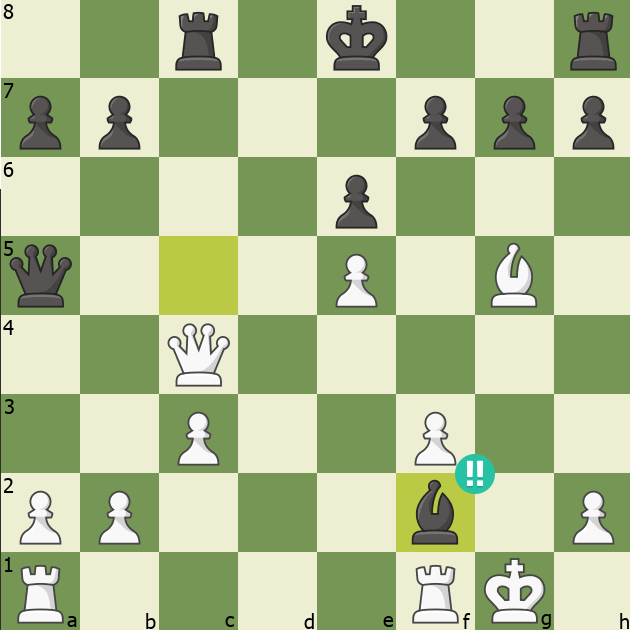
Brilliant Chess Move: Stunning Bishop Sacrifice Led to Checkmate
Most chess players have experienced it at least once. You spot a free pawn, win some material, and feel confident about your position—only to discover that your opponent had seen something much deeper.

Why Your Chess Accuracy Drops After Move 15
If your chess accuracy drops after move 15, the problem is not that you suddenly become a worse player. The problem is that the game has shifted from memory to understanding, and you have not trained that transition enough.

Why You Always Get in Time Trouble (And How Stockfish 18 Fixes It)
Every chess player knows the feeling. You navigate the opening perfectly. You transition into a solid middlegame. You build a completely fine, perhaps even slightly superior, position. And then, you glance at the clock. Your opponent has 15 minutes left. You have 42 seconds. Panic!