FIDE Candidates 2026 Final Update on April 17: Sindarov Wins in Cyprus
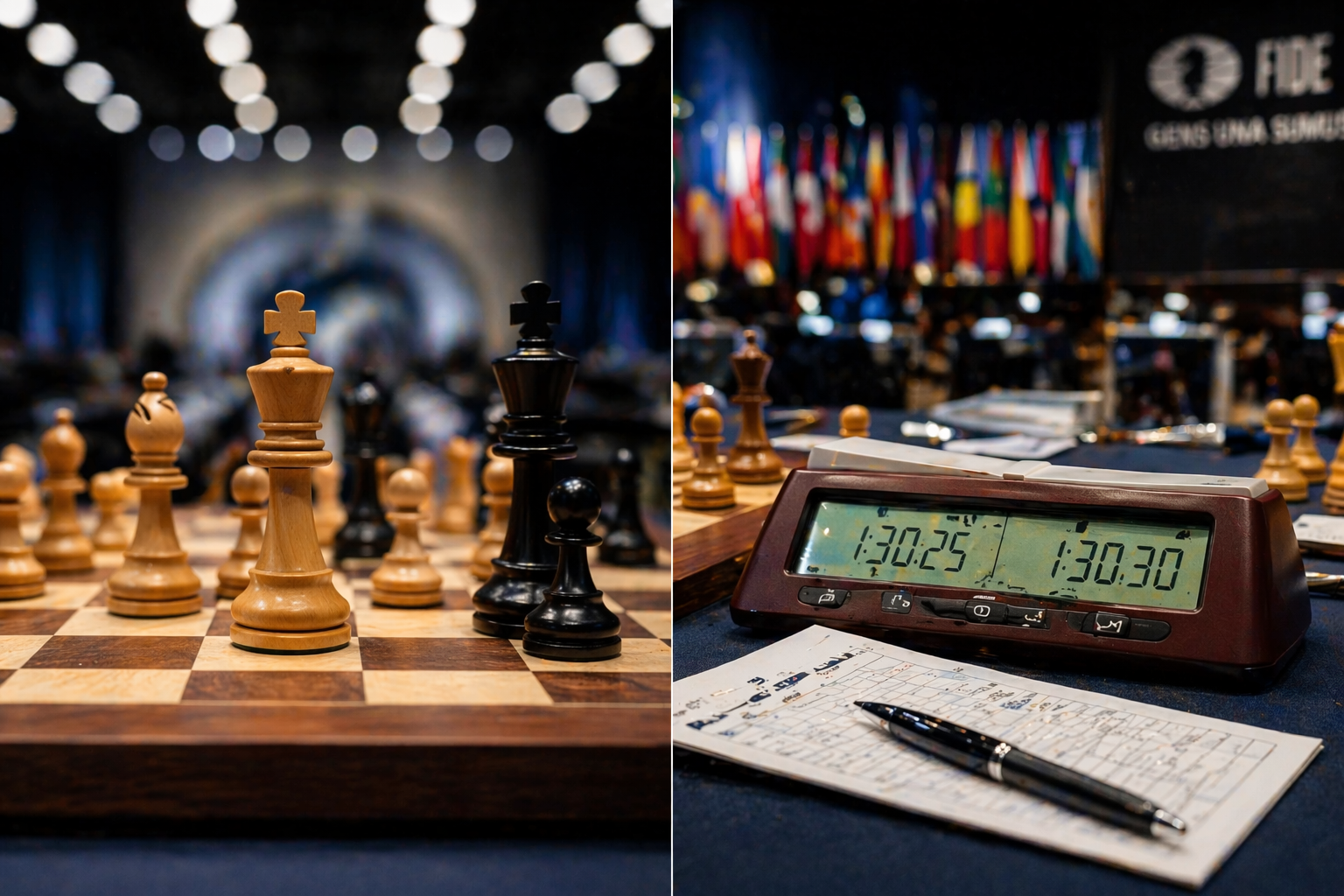
The 2026 FIDE Candidates was held in Peyia, Cyprus, from March 28 to April 16, using a 14-round double round-robin format to decide the next World Championship challenger. Javokhir Sindarov won the tournament with 10.0/14, finished undefeated, and ended 1.5 points clear of Anish Giri. He had already secured first place in Round 13 after drawing Giri, so the final round confirmed the standings rather than changing them.
Final table
Javokhir Sindarov — 10.0/14.
Anish Giri — 8.5/14.
Fabiano Caruana — 7.5/14.
Wei Yi — 7.0/14.
Hikaru Nakamura — 6.5/14.
Matthias Bluebaum — 6.0/14.
Praggnanandhaa R — 6.0/14.
Andrey Esipenko — 4.5/14.
What the standings tell us
This final table shows a very clean tournament story: one convincing winner, one clear runner-up, and a real gap between first place and the rest of the field. Sindarov did not need tie-breaks or a playoff, because his final margin was large enough to remove any ambiguity. In a Candidates event, where every round is high-pressure and every opponent is elite, winning by 1.5 points without losing a game is a major statement.
How Sindarov won
The early surge
Sindarov built his campaign on direct wins against strong rivals, beating Andrey Esipenko in Round 1, Praggnanandhaa in Round 3, Fabiano Caruana in Round 4, Hikaru Nakamura in Round 5, and Wei Yi in Round 6. He later added another win against Praggnanandhaa in Round 10, bringing his total to six victories across the event. That stretch gave him exactly what every Candidates leader wants: room to defend first place instead of chasing it.
Control after the lead
After taking over the event, Sindarov shifted into practical tournament management and avoided the kind of losses that reopen the race. He drew Giri in Round 7, Esipenko in Round 8, Bluebaum in Round 9, Caruana in Round 11, Nakamura in Round 12, Giri again in Round 13, and Wei Yi in Round 14. On paper that sequence looks quiet, but in context it was extremely effective because it denied every direct rival the head-to-head breakthrough they needed.
Key moments
Games that shaped the event
Several games defined the tournament’s final shape. Sindarov’s win over Caruana in Round 4 damaged one of the main pre-tournament favorites, his win over Nakamura in Round 5 widened the gap at the top, and his win over Wei Yi in Round 6 completed the strongest three-round burst of the event. The Round 13 draw with Giri then mathematically clinched first place with one round still to play.
The chase behind him
Anish Giri recovered impressively after losing to Praggnanandhaa in Round 1. He later defeated Esipenko in Round 4, Praggnanandhaa in Round 8, Caruana in Round 9, and Bluebaum in Round 14, which was enough for clear second place on 8.5/14. Caruana finished third on 7.5/14 after beating Esipenko in the last round, but losses to Sindarov, Nakamura, and Giri had already narrowed his title chances too much.
Want to replay Sindarov’s biggest wins, save the most critical positions, and compare your own ideas with engine-backed analysis instead of just reading the final score? Try DeepBlunder, then explore more elite tournament coverage, practical study content, and chess improvement articles on the DeepBlunder Blog.
Final round recap
Round 14 results
The final round ended with Caruana beating Esipenko, Giri beating Bluebaum, Nakamura drawing with Praggnanandhaa, and Sindarov drawing with Wei Yi. Because Sindarov had already secured the tournament in Round 13, those games finalized the order without threatening first place. Giri’s win secured sole second place, while Caruana’s win locked in clear third.
Why the last round still mattered
Even without a battle for first, the final day still mattered for the shape of the standings. Second and third were still in play, and both Giri and Caruana improved the look of their final tournaments by winning on demand. Sindarov’s quiet draw with Wei Yi was the perfect closing result for a player who had already done the hard work earlier in the event.
World Championship impact
A Candidates victory earns the right to play for the World Championship, and Sindarov’s win sends him into a title match against Gukesh Dommaraju. That matters far beyond one tournament result, because the Candidates is designed to identify the strongest challenger from an elite field. Winning it undefeated makes the achievement even more significant.
Why this feels like a breakthrough
The field included Giri, Caruana, Nakamura, Wei Yi, Praggnanandhaa, Bluebaum, and Esipenko, so Sindarov’s score was built against world-class opposition from start to finish. His campaign combined attacking efficiency in the first half with control and discipline in the second half. That combination is why this result reads as a genuine breakthrough tournament rather than a narrow or lucky finish.
Useful links
Official event site: FIDE Candidates 2026
Official results archive: Pairings and results
Internal link: DeepBlunder
Internal link: DeepBlunder Blog
Conclusion
By the end of the event, the story of the 2026 FIDE Candidates was unusually clear. Sindarov won with 10.0/14, stayed undefeated, secured first place before the final round, and finished comfortably ahead of the field. His path to victory was built on elite wins early, then precise risk management once the tournament was under his control.
Expanded FAQ
Who won the FIDE Candidates 2026?
Javokhir Sindarov won the 2026 FIDE Candidates.
What was Sindarov’s final score?
He finished on 10.0/14.
Did Sindarov lose any games?
No, he completed the tournament undefeated.
Who finished second at the 2026 Candidates?
Anish Giri finished second with 8.5/14.
Who finished third at the 2026 Candidates?
Fabiano Caruana finished third with 7.5/14.
How big was Sindarov’s winning margin?
He won the event by 1.5 points over Giri.
When did Sindarov clinch the tournament?
He secured first place in Round 13 after drawing Anish Giri.
What happened in the final round?
Caruana beat Esipenko, Giri beat Bluebaum, Nakamura drew Praggnanandhaa, and Sindarov drew Wei Yi
From the same category
Keep reading
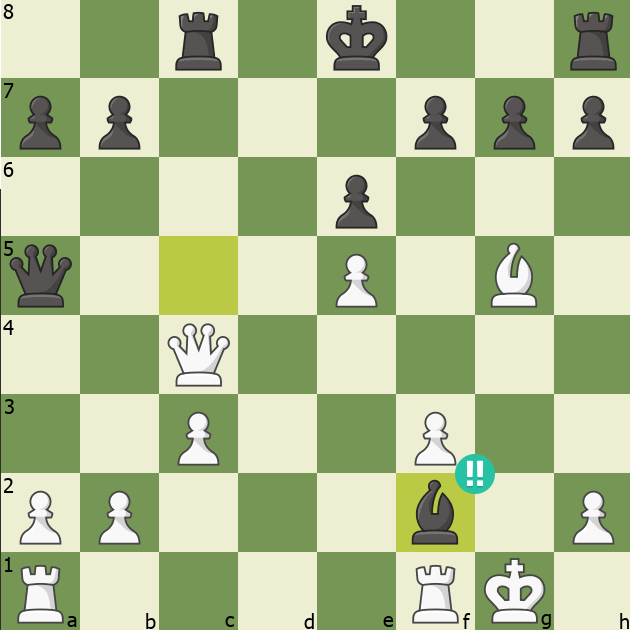
Brilliant Chess Move: Stunning Bishop Sacrifice Led to Checkmate
Most chess players have experienced it at least once. You spot a free pawn, win some material, and feel confident about your position—only to discover that your opponent had seen something much deeper.

Why Your Chess Accuracy Drops After Move 15
If your chess accuracy drops after move 15, the problem is not that you suddenly become a worse player. The problem is that the game has shifted from memory to understanding, and you have not trained that transition enough.

Why You Always Get in Time Trouble (And How Stockfish 18 Fixes It)
Every chess player knows the feeling. You navigate the opening perfectly. You transition into a solid middlegame. You build a completely fine, perhaps even slightly superior, position. And then, you glance at the clock. Your opponent has 15 minutes left. You have 42 seconds. Panic!