FIDE Candidates 2026 Round 10 Pairings: the day the tournament starts to feel very real
Certo — qui sotto trovi la versione pulita, già scritta per essere copiata e incollata nel blog.
FIDE Candidates 2026 Round 10: Pairings, Pressure, and the Games That Could Change Everything
There is a point in every Candidates Tournament when the event stops feeling like a chess festival and starts feeling like a test of nerve. The moves are still precise, the positions are still beautiful, and the games are still rich with ideas, but the emotional tone changes completely. Every draw begins to feel more expensive, every missed chance becomes harder to forget, and every player near the top of the standings starts hearing the same question in a more uncomfortable form: can you really finish this?
That is why Round 10 matters so much.
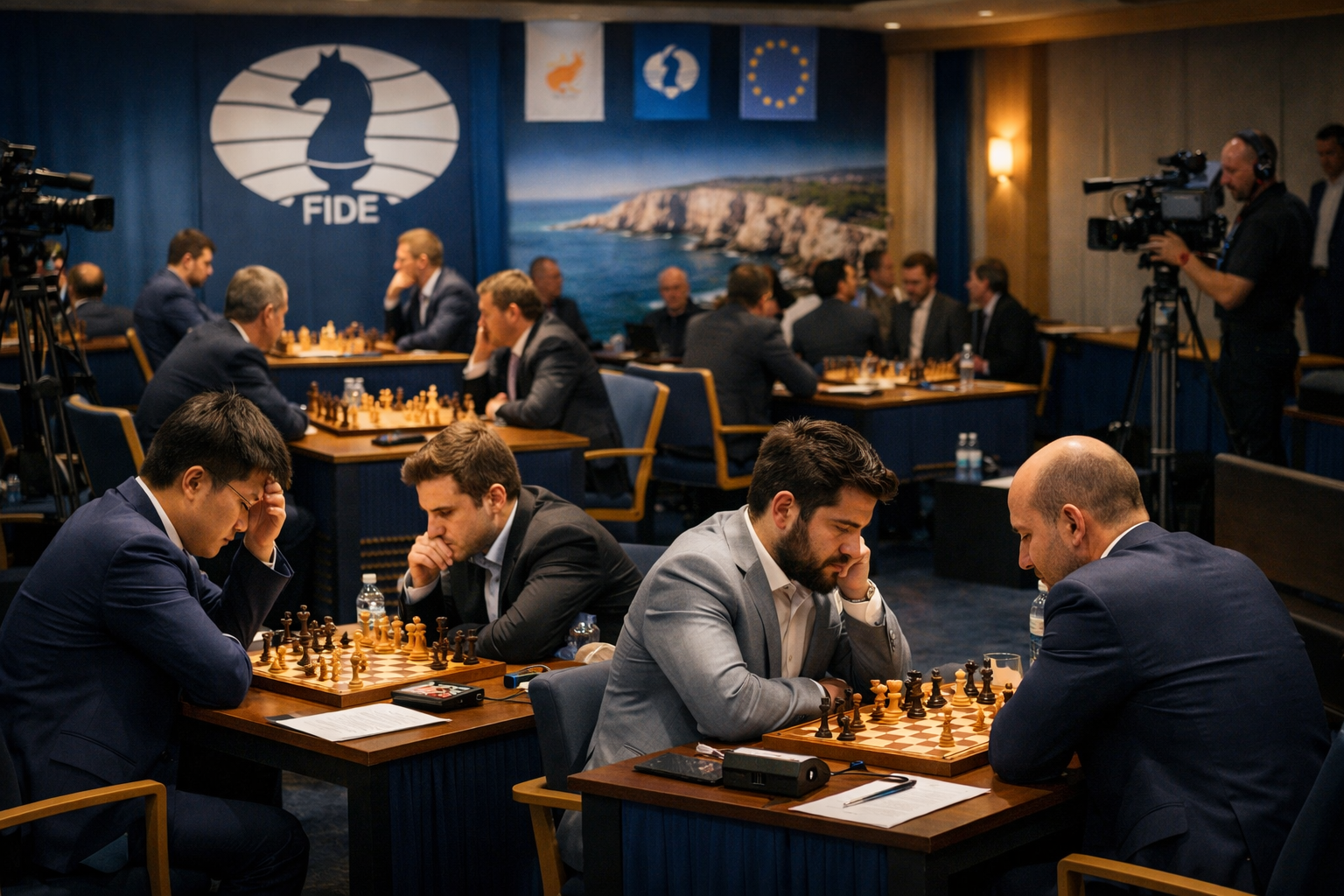
The FIDE Candidates Tournament 2026 is being played in Cyprus, and the official schedule places Round 10 on April 9, immediately before the April 10 rest day. That timing gives the round a special kind of weight. It is late enough for the pressure to be real, but still early enough for a single result to change the tone of the final stretch.
For anyone following the event closely, this is the stage where the tournament becomes sharper and more revealing. The opening phase is over. The middle section has done its work. By Round 10, nobody is really hiding anymore.
If you want the wider tournament picture first, it fits naturally to read DeepBlunder’s full Candidates 2026 guide before diving into this round.
Why Round 10 Changes Everything
The Candidates has always been one of the toughest events in chess because the format leaves very little room for comfort. The 2026 edition follows the classic eight-player double round-robin format over 14 rounds, and the winner becomes the official World Championship challenger; if first place is tied, a playoff decides it. That means every player faces every other player twice, once with each color, and nobody gets a soft path through the field.
In the early rounds, players can still afford patience. A draw can be called practical. A missed chance can be explained away as part of a long tournament. A slightly passive game can be justified because there is still time left.
By Round 10, that protection disappears.
At this point, leaders begin to think differently. They are no longer just trying to score points; they are trying to control momentum. Chasers also begin to experience the event differently. They are no longer playing only their own positions. They are playing the standings at the same time.
That is where the Candidates becomes more human and more interesting. Great preparation still matters. Endgame technique still matters. Calculation still matters. But now other qualities start to speak more loudly:
Patience under pressure.
The ability to recover after one bad day.
Emotional discipline after a missed opportunity.
The courage to push when the position is balanced but the tournament situation demands more.
The ability to avoid turning one painful result into two.
This is exactly why late-round Candidates chess is so compelling. A balanced position in Round 3 is just a balanced position. A balanced position in Round 10 can feel like an opportunity slowly slipping away.
Round 10 Pairings
The published Round 10 pairings are:
Andrey Esipenko vs. Matthias Bluebaum
Javokhir Sindarov vs. Praggnanandhaa R
Wei Yi vs. Fabiano Caruana
Anish Giri vs. Hikaru Nakamura
On paper, this is exactly the kind of round a major tournament wants late in the event. There is a leadership test, a marquee pairing, a dangerous recovery game for an established contender, and one lower-profile board that could still affect the wider story.
The official tournament pages make clear that the event schedule and pairings are central to how the final phase should be read, because the rounds are now tightly connected to preparation, fatigue, and recovery. That is why this round feels more important than a simple list of names might suggest.
For readers following the official sources, the most useful references are the FIDE Candidates schedule, the FIDE pairings announcement, and the Chess.com tournament page.
The Games That Matter Most
Sindarov vs. Praggnanandhaa
This is the game that feels most likely to shape the day’s main narrative.
There is something especially modern about this pairing. It does not feel old, rehearsed, or overly familiar. It feels current. Two ambitious players, both capable of high-quality classical chess, both fully able to change the rhythm of the tournament in one afternoon.
For the player setting the pace, this kind of round asks a very specific question: can you keep behaving like a leader once the whole tournament starts treating you like one? That is not the same challenge as simply playing good moves. Plenty of players can play well when expectations are still flexible. Far fewer look equally comfortable once every game begins to carry extra symbolic weight.
For the opponent, the opportunity is just as obvious. A strong result against the player in front does more than improve your own standing. It changes how everybody reads the next round. It changes the emotional map of the event.
Giri vs. Nakamura
This is the round’s marquee pairing.
Even casual chess readers will stop at this board first because the names carry instant recognition, and the styles create a natural contrast. One side suggests structure, control, and strategic clarity. The other suggests practical danger, discomfort, and the ability to make even unclear positions feel unpleasant to handle.
That contrast is why the pairing works so well. You do not need to know the latest opening novelty to understand the tension here. You only need to understand that neither player wants to give away an easy day at this stage of the tournament.
Games like this also matter because they tend to shape the mood of coverage around the round. If the game is sharp, it becomes the day’s central talking point. If it is calm, then the calm itself becomes part of the story because late in the Candidates, safety can also be a statement.
Wei Yi vs. Caruana
This feels like one of those quietly critical games that can define a tournament without immediately dominating the headlines.
Fabiano Caruana is exactly the kind of player people expect to remain dangerous in a long classical event. His reputation in serious tournaments is built on depth of preparation, patience, and the ability to survive tense positions without losing clarity. That does not mean every late-round game becomes easy. In fact, players with the biggest reputations often carry the heaviest psychological burden when the event begins to narrow.
Wei Yi is also not the kind of opponent who allows a soft reset. He is too strong, too accurate, and too serious for that. So the real tension on this board is not simply whether Caruana can win. It is whether he can take back control of his tournament rhythm without drifting into another difficult result.
Esipenko vs. Bluebaum
Not every important Candidates story sits on the top board.
Some of the most revealing games in a round happen lower in the standings, where players are still trying to shape the meaning of their tournament. One clean win can restore confidence. One strong performance can change how an entire event is remembered. One accurate game can remind everyone that the field is deeper than the headline race.
That is what makes Esipenko vs. Bluebaum interesting. It is the kind of board that may look secondary at first glance, but can still influence the atmosphere of the whole day. In a double round-robin, everyone remains relevant because everyone can still affect somebody else’s path.
What Club Players Can Learn From Round 10
One reason the Candidates is such strong material for improvement is that it gives club players more than entertainment. It gives structure. The official event information shows that this is a classical tournament, which is exactly why the games are so useful as study material: they reveal opening preparation, strategic choices, defensive technique, clock management, and endgame skill in a much fuller way than rapid or blitz usually can.
That matters because most amateur players watch elite games in the wrong way. They look only for the winner, the blunder, or the final tactic. But the best lessons often appear much earlier.
When you study a Round 10 game properly, better questions are:
Where did the opening preparation really end?
Which move changed the position emotionally, not just objectively?
Who handled the clock more calmly?
Which decision would be obvious to an engine but difficult for a human under pressure?
Which endgame ideas actually survived practical tournament conditions?
That is where the bridge to real improvement begins.
Following the Candidates is exciting, but studying it properly is where real rating progress starts. Use DeepBlunder to analyze the critical positions from Round 10, compare candidate moves, understand practical mistakes, and turn top-level tournament games into training sessions you can actually use in your own chess work.
That kind of study is much more valuable than passively scrolling through moves. The best tournament coverage should not only tell readers what happened. It should also help them understand what can be learned from it.
For readers who want to stay inside the same topic after this article, a natural next step is the DeepBlunder Blog, where broader tournament and improvement content already connects with the Candidates story.
Conclusion and FAQ
Round 10 is the point where a Candidates Tournament starts telling the truth. The official schedule places it late enough for the pressure to feel serious and early enough for one result to still reshape the final phase. That alone gives the round unusual importance.
But the pairings add another layer. There is a leadership test, a headline clash, a high-pressure board for an elite contender, and a dangerous lower pairing that could still bend the wider narrative. That is what makes this round more than just another day of elite chess. It makes it one of the last true hinge points of the tournament.
What is special about Round 10 of the FIDE Candidates 2026?
Round 10 is especially important because it falls immediately before the April 10 rest day on the official schedule, which gives the results extra weight heading into the final stretch.
Where is the FIDE Candidates 2026 being played?
The tournament is being held in Cyprus, as confirmed by the official FIDE schedule and event coverage.
What are the Round 10 pairings?
The published Round 10 pairings are Esipenko vs. Bluebaum, Sindarov vs. Praggnanandhaa, Wei Yi vs. Caruana, and Giri vs. Nakamura.
What is the format of the Candidates Tournament?
The event is an eight-player double round-robin played over 14 rounds, and the winner becomes the official challenger in the World Championship cycle; if first place is tied, a playoff is used.
Why do the rest days matter so much?
The official schedule includes rest days throughout the tournament, and those pauses matter because the Candidates is not only about calculation and opening preparation, but also about recovery, emotional reset, and sustained concentration over more than two weeks.
From the same category
Keep reading
Brilliant Chess Move: Stunning Bishop Sacrifice Led to Checkmate
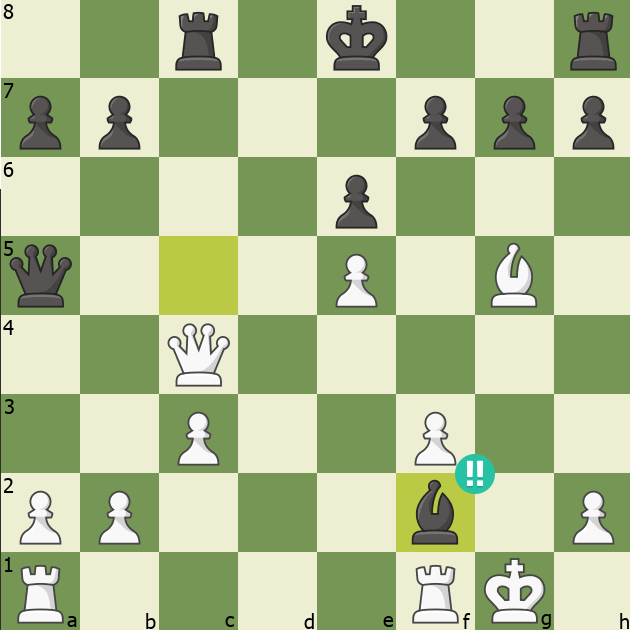
Most chess players have experienced it at least once. You spot a free pawn, win some material, and feel confident about your position—only to discover that your opponent had seen something much deeper.

Why Your Chess Accuracy Drops After Move 15
If your chess accuracy drops after move 15, the problem is not that you suddenly become a worse player. The problem is that the game has shifted from memory to understanding, and you have not trained that transition enough.

Why You Always Get in Time Trouble (And How Stockfish 18 Fixes It)
Every chess player knows the feeling. You navigate the opening perfectly. You transition into a solid middlegame. You build a completely fine, perhaps even slightly superior, position. And then, you glance at the clock. Your opponent has 15 minutes left. You have 42 seconds. Panic!