FIDE Candidates 2026 standings update April 14 2026
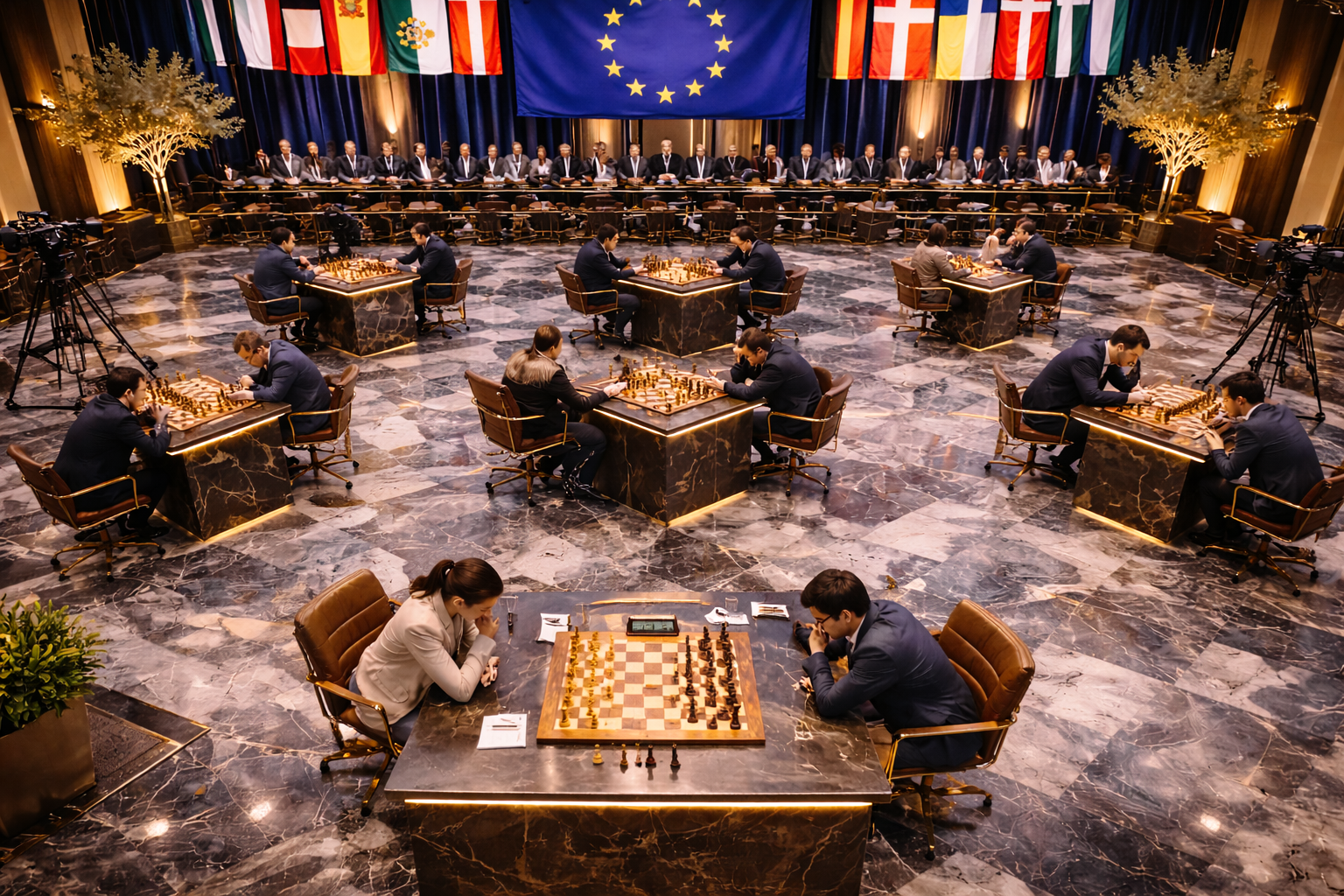
The 2026 FIDE Candidates is being played in Cyprus from March 28 to April 16, and the event will decide who earns the right to challenge world champion Gukesh Dommaraju in the next World Championship match.
The open field features Hikaru Nakamura, Fabiano Caruana, Anish Giri, Praggnanandhaa R, Wei Yi, Javokhir Sindarov, Andrey Esipenko, and Matthias Bluebaum in a 14-round double round robin.
As of the morning of April 14, before Round 13 begins, Javokhir Sindarov is in clear first place and controls his own fate with two rounds left.
Why this update matters
This is the stage of the Candidates where every half-point starts to feel heavier than an opening novelty. Two rounds remain, the leader has daylight, and the main pursuers have almost no margin left for caution.
Sindarov has built the strongest campaign of the event so far, mixing early wins with controlled draws once he reached the front.
Giri is the closest chaser, while Caruana still has outside chances if the leader finally slips.
Round 13 is especially important because Giri and Sindarov are paired against each other, while Caruana faces Praggnanandhaa and Nakamura meets Bluebaum.
Standings before Round 13
Based on the official game results through Round 12, the leaderboard looks like this.
RankPlayerScore1Javokhir Sindarov 9/12 2Anish Giri 7/12 3Fabiano Caruana 6/12 4=Hikaru Nakamura 5.5/12 4=Wei Yi 5.5/12 6Matthias Bluebaum 5/12 7=Andrey Esipenko 4.5/12 7=Praggnanandhaa R 4.5/12
The headline is simple: Sindarov leads by two full points over Giri with only two rounds remaining.
That is a commanding edge in a Candidates tournament, especially because the leader already survived the first wave of direct clashes and now only needs to manage the final sprint.
Still, the format is unforgiving, and one loss in a direct encounter can instantly turn a “comfortable lead” into a very nervous finish.
Tournament recap so far
Sindarov’s fast start changed the event
Sindarov announced himself immediately by beating Esipenko in Round 1.
He then added a win over Praggnanandhaa in Round 3 and followed it with another major result against Caruana in Round 4.
Those victories were not isolated sparks; they became the backbone of a serious title bid.
The real turning point came when Sindarov beat Nakamura in Round 5 and Wei Yi in Round 6.
By the end of that stretch, he had transformed a good start into a genuine breakaway.
From there, his strategy became very practical: hold the balance, avoid unnecessary risk, and force the chasing pack to take bigger chances than they wanted.
Giri built the best comeback
Giri lost in Round 1 to Praggnanandhaa, which made his event look awkward before it had even settled.
Since then, however, he has produced the most convincing recovery in the field, beating Esipenko in Round 4, Praggnanandhaa in Round 8, and Caruana in Round 9.
That sequence lifted him into clear second place and kept the tournament alive.
What makes Giri dangerous is not just the scoreboard. His event now has a strong narrative rhythm: early damage, reset, then a measured climb powered by precision rather than chaos. That profile matters in the final rounds, because players who are chasing often need both form and emotional balance.
Caruana never found the extra gear
Caruana started well with wins over Nakamura in Round 1, Wei Yi in Round 3, and Bluebaum in Round 5.
For a moment, that looked like the platform of a classic Caruana Candidates run.
Instead, the middle section stalled his charge.
The losses to Sindarov in Round 4, Nakamura in Round 8, and Giri in Round 9 left him on 6/12 after Round 12.
He is still mathematically relevant, but the practical reality is harsher: he needs help from the leader’s opponents and probably needs to win at least one of the last two games himself.
That is a difficult place to be in a field where nobody gives points away cheaply.
Main games that shaped the standings
Round 1: Caruana beats Nakamura, Sindarov strikes early
Round 1 produced two immediate shocks with long-term consequences. Caruana defeated Nakamura, while Sindarov defeated Esipenko, and Praggnanandhaa also opened with a win over Giri.
From a standings perspective, that first day already split the field into attackers and repair jobs.
Caruana’s win mattered because it gave him momentum in one of the most emotionally charged pairings in modern elite chess.
Sindarov’s win mattered even more in hindsight because it set the tone for an event where he has looked comfortable carrying initiative.
At the Candidates, an opening-round win does more than add one point; it changes the psychology of the whole tournament.
Round 4 and Round 5: the leader creates separation
Sindarov beat Caruana in Round 4.
He then defeated Nakamura in Round 5.
Those are the kinds of wins that do not just improve a score; they cut directly into the ambitions of rival contenders.
In the same phase, Giri beat Esipenko in Round 4, and Caruana beat Bluebaum in Round 5.
That kept multiple storylines alive, but Sindarov’s results were heavier because they came against players many expected to fight for first.
By then, the tournament had a clear front-runner.
Round 8 and Round 9: the chase reorganizes
Round 8 delivered two decisive games in the open section: Giri beat Praggnanandhaa and Nakamura beat Caruana.
That round hurt Caruana badly because it simultaneously boosted two rivals and damaged his own rhythm.
When a contender loses while direct competitors score, the table suddenly looks steeper.
Round 9 sharpened the picture even more because Giri beat Caruana.
That result pushed Giri toward clear second and left Caruana chasing from behind.
It also set up the logical late-tournament question: would anyone get a direct shot at the leader?
Round 12: four draws, big tension
All four open games in Round 12 ended in draws: Esipenko–Praggnanandhaa, Bluebaum–Caruana, Sindarov–Nakamura, and Wei Yi–Giri.
Those peaceful results preserved the existing order and sent the event into Round 13 with Sindarov still two points ahead.
For the leader, that was a very successful day.
The draw with Nakamura was particularly important for Sindarov because it prevented one of the most dangerous pursuers from creating late chaos.
Giri also did his part by avoiding damage against Wei Yi, but a draw was not enough to cut into the gap.
That is why Round 13 now feels so central.
Round 13 preview
The marquee pairing is Anish Giri vs Javokhir Sindarov.
If Giri wins, the race tightens dramatically before the final round.
If Sindarov draws, he remains in a dominant position; if he wins, he is effectively at the doorstep of the title.
The other pairings are Wei Yi vs Andrey Esipenko, Hikaru Nakamura vs Matthias Bluebaum, and Fabiano Caruana vs Praggnanandhaa R.
Caruana almost certainly needs a win to keep realistic pressure on the top two.
Nakamura, meanwhile, needs both points and outside help, which is never the ideal formula in a Candidates finish.
If you want to replay the critical moments from Sindarov’s wins over Caruana and Nakamura or test your own evaluation against engine lines, try DeepBlunder and browse more tournament breakdowns on the DeepBlunder blog.
What the standings really say
A two-point lead with two rounds left is enormous, but it is not the same thing as a guaranteed finish. The Candidates has a habit of turning practical choices into dramatic stories, especially when one direct encounter still remains.
What stands out in Sindarov’s scorecard is balance. He did not rely on a single hot streak and then hang on with luck. He beat Esipenko, Praggnanandhaa, Caruana, Nakamura, Wei Yi, and Praggnanandhaa again across the first ten rounds, then consolidated with a string of draws.
That mix of ambition and control is usually what wins this event.
Giri’s case is different. He is not leading, but he is the one player who still has a direct meeting with Sindarov in hand and enough momentum to make that game matter.
If you are looking for the simplest way to explain the tournament on April 14, it is this: Sindarov owns the pole position, and Giri owns the last serious chance to shake him.
Official links for readers
For live follow-up, readers can go directly to the official FIDE Candidates website and the official pairings and results page.
Those are the most useful pages for checking Round 13 pairings, completed results, and final-round updates.
Conclusion
The FIDE Candidates 2026 has reached the phase where narrative and mathematics finally meet. Sindarov is no longer just the surprise leader; he is the player closest to earning the right to challenge Gukesh, and he has put himself there by beating elite rivals head-to-head.
Giri remains the only immediate threat with direct access to the leader in Round 13, while Caruana needs a near-perfect finish plus help from elsewhere.
That makes the next round unusually clean from a storytelling angle: the leader faces the closest chaser, and the tournament may either explode back into life or move decisively toward closure.
FAQ
Who is leading the FIDE Candidates 2026 on April 14?
Javokhir Sindarov leads the tournament with 9/12 before Round 13.
Who is second in the standings?
Anish Giri is second on 7/12 after Round 12.
Is Fabiano Caruana still in contention?
Caruana is on 6/12 after Round 12, so he is still alive mathematically, but he needs wins and help from other boards.
Which game matters most in Round 13?
The key pairing is Anish Giri vs Javokhir Sindarov because it is the direct meeting between first and second place.
Where is the FIDE Candidates 2026 being played?
The event is being held in Cyprus.
How many rounds does the tournament have?
The open Candidates is a 14-round double round robin.
From the same category
Keep reading
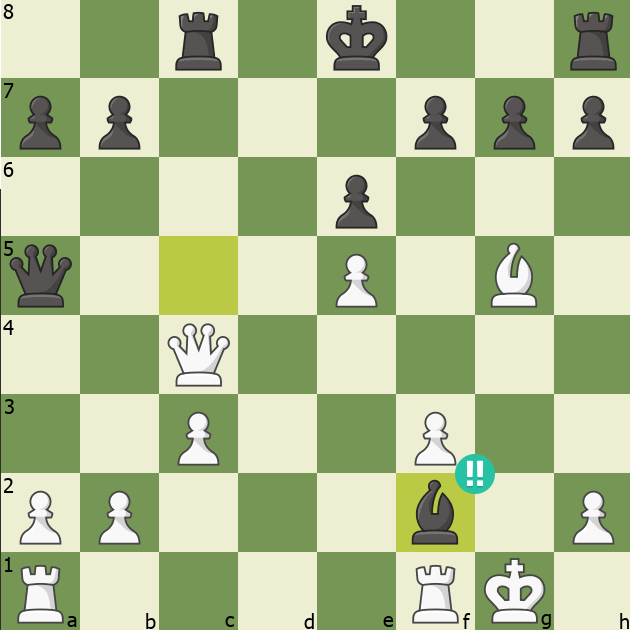
Brilliant Chess Move: Stunning Bishop Sacrifice Led to Checkmate
Most chess players have experienced it at least once. You spot a free pawn, win some material, and feel confident about your position—only to discover that your opponent had seen something much deeper.

Why Your Chess Accuracy Drops After Move 15
If your chess accuracy drops after move 15, the problem is not that you suddenly become a worse player. The problem is that the game has shifted from memory to understanding, and you have not trained that transition enough.

Why You Always Get in Time Trouble (And How Stockfish 18 Fixes It)
Every chess player knows the feeling. You navigate the opening perfectly. You transition into a solid middlegame. You build a completely fine, perhaps even slightly superior, position. And then, you glance at the clock. Your opponent has 15 minutes left. You have 42 seconds. Panic!