How to Stop Hanging Pieces in Chess: A Complete Anti-Blunder Guide for Club Players
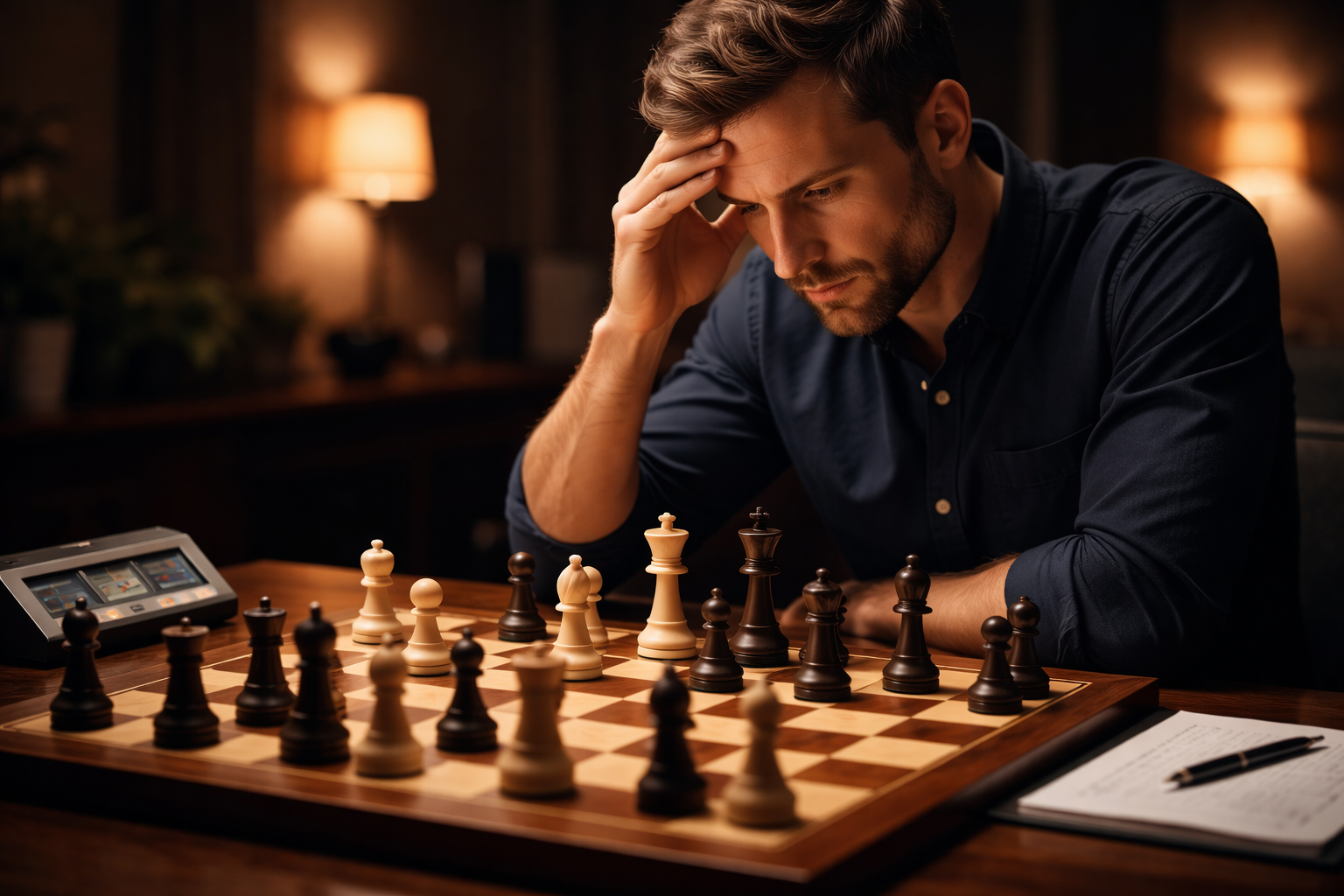
If you keep losing pieces in chess, you are not alone, and you are not broken. Most club players do not lose because they know nothing about openings, tactics, or endgames. They lose because one move in the middle of a decent game goes wrong: a knight is left en prise, a bishop gets trapped, a back-rank tactic appears, or a “natural” move ignores the opponent’s only threat.
That is why this guide focuses on a narrower, more practical problem than generic “chess improvement.” Instead of asking how to become a much stronger player in the abstract, we are answering a more useful question: how do you stop making the kind of mistakes that instantly ruin playable positions? That long-tail angle is better for search, but more importantly, it is better for real improvement.
The good news is that hanging pieces is rarely random. It usually comes from a predictable combination of habits: moving too fast, calculating only your own idea, underestimating forcing moves, playing automatically in familiar structures, or becoming emotionally attached to an attack. Once you identify those habits, you can replace them with a process that is simple enough to use in real games.
This guide is written for club players, online rapid players, improving intermediates, and anyone who feels they “often play well for 20 moves and then blunder something silly.” If that description feels painfully accurate, you are exactly the kind of reader this article is for.
Why Players Keep Hanging Pieces
Hanging pieces is usually a process problem
When players say, “I just blundered,” they often talk as if the mistake appeared out of nowhere. In reality, most one-move blunders are the final result of a poor decision-making sequence.
A typical sequence looks like this:
You get an idea.
You look only at the move you want to play.
You check one variation that favors you.
You do not ask what changed after the opponent’s last move.
You skip a final safety check.
You move too quickly because the move feels obvious.
The piece does not fall because chess is cruel. The piece falls because the move was never stress-tested.
This is important because it changes how you train. If your problem were “lack of talent,” you would be stuck. But if your problem is “I do not run a reliable blunder check before moving,” then that is trainable. A habit can be replaced.
Why one-move blunders happen even in winning positions
One of the most frustrating search intents in chess is: “why do I blunder winning positions in chess?” The answer is simple and annoying. Winning positions make players careless.
When you feel better, your brain often shifts from accuracy mode into conversion mode. You start thinking:
There must be a knockout.
Any active move should work.
I should not need to defend anymore.
I do not want to “waste time” checking details.
That mental shift is dangerous. Many players are actually more careful when they are slightly worse than when they are clearly better. In worse positions they defend, calculate, and respect the opponent’s ideas. In winning positions they rush.
That is why some of the worst blunders happen just after gaining an advantage. The position improves, but discipline drops.
The five most common causes of hanging pieces
1. Tunnel vision
Tunnel vision means you only see your plan. You notice your attack, your tactic, your pawn break, or your active square, but you do not properly look at the opponent’s best response.
This causes:
Missed forks.
Discovered attacks.
Simple captures of undefended pieces.
Counterattacks on your queen or king.
Loose pieces left behind after a flashy move.
2. Automatic moves
Players often make routine moves without asking whether the position actually supports them. They castle automatically, trade automatically, recapture automatically, centralize automatically, or push pawns automatically.
Automatic chess feels efficient, but it creates blind spots. Many “silly blunders” are just the result of doing a generally good thing in the wrong concrete position.
3. Time pressure
Rapid and blitz amplify bad habits. You move fast, trust intuition too much, and tell yourself you will “calculate later.” But later never comes.
Time pressure creates a brutal pattern:
You do not verify the move.
You hope the opponent has no tactic.
You realize the blunder one second after releasing the piece.
4. Emotional tilt
You blunder after missing a tactic, after getting surprised in the opening, after failing to convert a good position, or after seeing your evaluation drop. In those moments you stop playing the board and start playing your emotions.
Tilt leads to:
Overforcing.
Desperation sacrifices.
Refusal to play simple moves.
A need to “do something now.”
Reckless attempts to win back control immediately.
5. Weak board scanning
Many players simply do not have a stable habit of scanning the whole board before moving. They look at one area, usually where the last action happened, and ignore tactical changes elsewhere.
This is especially dangerous with:
Long diagonals.
Back-rank weaknesses.
Knight forks.
Loose rooks after queen movement.
Pinned pieces that no longer defend something important.
The Anti-Blunder System
The goal is not perfect chess
A lot of players fail because they think the solution is to calculate five moves deep in every position. That is unrealistic and unnecessary. Most club-level blunders can be avoided with a shorter process.
You do not need a grandmaster brain. You need a repeatable filter.
A good anti-blunder system should be:
Short enough to use in rapid.
Clear enough to use under pressure.
Flexible enough for openings, middlegames, and endgames.
Strict enough to stop impulsive moves.
The system below is designed for exactly that.
Step 1: Start with the opponent’s last move
Before you think about your own move, ask one simple question:
What did my opponent’s last move change?
Not “what do I want to do?”
Not “what move looks active?”
Not “what opening plan do I remember?”
Ask what changed.
Use this micro-checklist:
What new square is attacked?
What new line was opened?
What piece became loose?
What threat exists now?
What stopped being defended?
This is one of the strongest habits in chess improvement because it forces you to react to reality before you drift into your own ideas.
Step 2: List at least two candidate moves
Never trust the first move you like. The first move may be good, but if you never compare it with anything else, you are thinking like a gambler, not a practical player.
A good rule is:
One active candidate.
One solid candidate.
One waiting or improving candidate, if the position allows it.
This widens your perspective immediately. It also makes you less emotionally attached to one move, which is critical when your favorite move fails the tactical test.
Step 3: Check forcing moves for both sides
This is the heart of the blunder check before every move.
Before playing, scan:
Checks.
Captures.
Direct threats.
Tactical motifs such as forks, pins, skewers, discoveries, mating nets, trapped pieces, and overloaded defenders.
Do this for both players, not just for yourself.
A useful sentence to repeat mentally is:
“If I play this move, what is the most forcing thing my opponent can do?”
That single question catches a huge percentage of one-move blunders.
Step 4: Count defenders and attackers
Club players often hang pieces because they see a piece is attacked and assume it is fine, or see a tactical sequence and assume it works. But many positions can be simplified by just counting.
Before releasing the piece, ask:
Is the piece I am moving currently defending something important?
After my move, what becomes underdefended?
If a capture sequence starts, who runs out of defenders first?
Is a piece protected by a pinned unit that cannot really move?
This is not glamorous chess, but it wins games. A lot of tactical accuracy is just disciplined counting.
Step 5: Do the final blunder check
This is the last gate. Never skip it.
Before every serious move, ask:
Does my move hang a piece?
Does it allow a fork?
Does it expose my king?
Does it leave the back rank weak?
Does it allow a tactical shot on my queen or rook?
What is the most annoying reply my opponent has?
If you cannot answer those questions, you are not ready to move yet.
A practical version for rapid games
In rapid you may not have time for a full calculation tree, but you do have time for a 10-second filter.
Use this:
What changed?
What are my two best candidates?
Any checks, captures, or threats for my opponent?
Am I hanging anything?
That short version alone can save enormous numbers of points.
How to Stop Hanging Pieces in the Opening
Most opening blunders are not theory problems
Players often think they need more opening preparation, but at club level many opening losses happen before theoretical knowledge becomes the main issue.
The real opening problems are usually:
Slow development.
Greedy pawn grabbing.
Early queen adventures.
King left in the center.
Loose pieces created by careless development.
Ignoring tactical resources around the e-file, f-file, or long diagonals.
If your goal is to stop losing pieces in chess, your opening objective is not “memorize more.” It is “reach a playable middlegame without tactical damage.”
Opening rules that reduce blunders fast
Develop with purpose
Try to make each developing move answer one of these questions:
Does it improve piece activity?
Does it increase control of the center?
Does it support king safety?
Does it reduce tactical vulnerability?
Moves that only “look natural” but do not improve your position concretely are often the beginning of later problems.
Do not grab poisoned pawns casually
Many club players hang bishops, knights, and even queens because they assume every free pawn is actually free.
Before grabbing material in the opening, ask:
Can the piece retreat safely?
Does taking the pawn open lines against my king?
Am I falling behind in development?
Is the pawn bait for a trap?
If you are unsure, keep development and king safety over greed.
Castle before the position gets sharp
This is not an absolute rule, but for most club players it is a useful practical principle. The longer your king stays in the center, the more likely a tactical detail will punish you.
Castling early often reduces:
Pins on central files.
Random checks.
Sacrifices on e6, e3, f7, or f2.
Rook coordination problems.
The psychological urge to “survive one more move before castling.”
A model opening mindset
A strong practical opening mindset sounds like this:
Develop.
Keep pieces defended.
Respect the opponent’s threats.
Do not force complications without reason.
Enter the middlegame with coordination, not chaos.
That approach may not create viral brilliancies, but it creates stable results.
How to Reduce Blunders in the Middlegame
Middlegames punish wishful thinking
The middlegame is where players most often fall in love with their own plans. This is also where most pieces get hung.
Common middlegame traps include:
Attacking with too few pieces.
Assuming a tactic works because it looks thematic.
Making pawn breaks without checking tactical consequences.
Centralizing a queen onto a square that invites tempo moves.
Forgetting that a defended piece may be tactically overloaded.
A middlegame move should not be judged only by how active it looks. It must survive contact with the opponent’s best reply.
Stop playing “hope chess”
Hope chess is when your move is based on the idea that the opponent will not find the refutation.
You are playing hope chess when you think:
“This should be dangerous.”
“Maybe they won’t see it.”
“I think I’m okay here.”
“If that move works for them, I’m in trouble.”
These are red-flag thoughts.
A reliable improvement rule is this: if your move loses to one obvious tactical reply, then it is not a brave move. It is a bad move. Honest players improve faster because they stop rewarding their own wishful thinking.
Always identify loose pieces
A classic tactical rule says that loose pieces drop off. Club players should treat that as a daily survival principle, not a clever slogan.
During the middlegame, constantly ask:
Which of my pieces are defended only once?
Which of my opponent’s pieces are defended only once?
Which squares create forks?
Which diagonal or file could open suddenly?
Loose pieces are tactical magnets. If you track them well, you will blunder less and spot more opportunities.
How to handle attacking positions safely
Many players blunder most when they are attacking, because attacking makes them optimistic. That optimism reduces accuracy.
Before launching or continuing an attack, ask:
How many pieces are involved?
Is my king still safe?
What happens if the attack fails?
Can my opponent trade queens?
Am I sacrificing because it works, or because I want the game to become exciting?
The strongest practical attackers are not reckless. They are disciplined. They attack after checking that the position truly justifies it.
How to Stop Blundering in Endgames
Endgames reward patience and punish laziness
Players often relax in endgames because fewer pieces remain. That is a mistake. Endgames may be quieter, but they are often less forgiving.
You can hang:
Opposition.
Key tempos.
Passed pawns.
Pawn structure.
The only drawing mechanism in the position.
A single careless king move can lose what looked like a “simple” ending.
Use a slower thought process in king and pawn endings
King and pawn endings are especially dangerous because players often rely on intuition when calculation is required.
Before making a move, check:
Whose king is more active?
Can either side create a passed pawn?
Does opposition matter?
Is there a race after a pawn break?
Can I simplify into a winning or losing pawn ending?
If you are not sure, do not move quickly. Endgame speed is overrated. Endgame precision is everything.
Avoid lazy exchanges
A common club-player mistake is to trade into an endgame just because it feels simpler.
Before exchanging, ask:
Does this improve my king?
Does this improve the opponent’s king?
Are my pawns weaker after the trade?
Am I removing my own active piece?
Does the ending become easier for me, or merely less complicated emotionally?
There is a big difference.
Training Methods That Actually Reduce Blunders
Puzzle training works only if done correctly
Tactics training helps, but only when it resembles real thinking. Many players do hundreds of puzzles and still hang pieces because they are practicing pattern recognition without discipline.
To make puzzles useful:
Do not move instantly.
Calculate the full line.
Ask what the opponent’s best defense is.
Notice which tactical motif decides the position.
Review missed puzzles instead of just collecting ratings.
The purpose of tactics is not to feel sharp. It is to build a cleaner scanning habit.
Analyze your own games before using an engine
If you really want to know how to analyze chess blunders after a game, start without assistance.
Write down:
The move where you first felt uncomfortable.
The move where the evaluation probably changed.
The tactic you missed.
The candidate moves you considered.
Whether the blunder came from fear, greed, speed, or hope chess.
Only after that should you use deeper analysis.
Why? Because if you look at evaluation bars too early, you learn what was wrong but not why you personally chose it. Improvement depends on the “why.”
Build a blunder journal
This is one of the most underrated long-term training tools.
Create a simple document or spreadsheet and log:
Date.
Time control.
Opening.
First serious mistake.
Type of blunder.
Emotional state.
One lesson.
After a few weeks, patterns usually become obvious.
You may discover:
You blunder more in rapid than classical.
You hang pieces after long thinks.
You play too fast when better.
You miscalculate knight moves more than bishop moves.
You lose control after unusual openings.
Once you see the pattern, training becomes targeted instead of generic.
A weekly anti-blunder routine
A practical weekly routine for club players could be:
3 serious rapid games.
1 longer game, if possible.
20 tactical puzzles per day with full calculation.
2 game reviews without engine first.
1 session on basic endgames.
1 session reviewing your blunder journal.
That is enough to improve noticeably if you stay consistent.
Turn your mistakes into a system
Reading about blunders is useful, but most improvement happens when you review your own games and identify the same recurring error patterns over and over again.
DeepBlunder is a natural fit for this process. Use it to study your games, organize mistakes, review tactical oversights, and build a more reliable anti-blunder routine around your real positions, not just random examples.
Start here: DeepBlunder and explore more improvement content on the DeepBlunder Blog.
If your goal is to stop hanging pieces in chess, the fastest path is not more chess noise. It is better feedback.
A Simple In-Game Checklist You Can Memorize
If you remember only one thing from this guide, make it this checklist.
Before every move, ask:
What changed after my opponent’s last move?
What are my top two candidate moves?
What checks, captures, and threats exist for both sides?
Does my move leave any piece loose?
What is my opponent’s most annoying reply?
If I were playing against myself, how would I punish this move?
That final question is especially powerful. It forces you to look at your own move with hostile eyes.
A lot of chess improvement is just learning how to become your own best defender before the opponent gets the chance.
FAQ
How do I stop hanging pieces in chess?
Use a short pre-move routine every turn. Check what changed after the opponent’s last move, scan for checks-captures-threats, count defenders, and ask whether your intended move leaves any piece loose.
Why do I keep making one-move blunders in chess?
Most one-move blunders come from moving too fast, focusing only on your own plan, or skipping a final safety check. The problem is usually not knowledge alone, but process.
What is the best blunder check before every move?
A practical blunder check is: what changed, what are the forcing moves, what is loose, and what is the opponent’s most annoying reply. If you can answer those four questions, many tactical oversights disappear.
How can I reduce blunders in rapid chess?
Use a shorter thinking routine rather than trying to calculate everything. In rapid, a 10-second safety filter is more useful than an ambitious but unrealistic deep calculation on every move.
Why do I blunder winning positions in chess?
Because winning positions often reduce discipline. Players get excited, assume any active move is enough, stop respecting the opponent’s threats, and rush the conversion.
Should I do more tactics to stop losing pieces?
Yes, but do tactics slowly enough to calculate properly. Fast guessing helps less than careful solving with pattern recognition and honest verification.
Is opening study the best way to stop blundering?
Not usually. For most club players, reducing blunders comes more from cleaner decision-making, better board scanning, and stronger tactical awareness than from memorizing more opening lines.
How should I review a game after hanging a piece?
First reconstruct your thought process without help. Then identify the critical moment, classify the error, and only after that compare your ideas with deeper analysis.
Can endgames also cause blunders?
Absolutely. Endgames punish lazy exchanges, poor king activity, and inaccurate pawn-race calculation. Fewer pieces do not mean fewer ways to lose.
What is the fastest way to improve if I blunder a lot?
Build a repeatable anti-blunder routine, review your own games consistently, and keep a journal of recurring mistakes. Fast improvement usually comes from removing losses, not from chasing brilliance.
Conclusions
The most encouraging truth about chess blunders is that they are often more fixable than people think. You do not need to become a tactical genius overnight. You need a process that is calm, repeatable, and honest enough to catch your own bad moves before the board punishes them.
If you apply this guide well, the first result may not be that you suddenly play brilliant attacking chess. The first result is usually something better: you stop losing good positions for free. Your games become more stable, your calculation becomes cleaner, and your confidence starts resting on discipline instead of hope.
From the same category
Keep reading
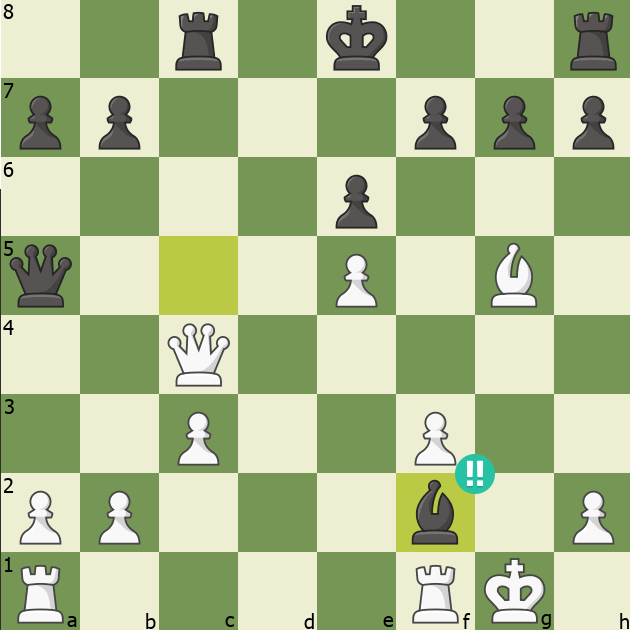
Brilliant Chess Move: Stunning Bishop Sacrifice Led to Checkmate
Most chess players have experienced it at least once. You spot a free pawn, win some material, and feel confident about your position—only to discover that your opponent had seen something much deeper.

Why Your Chess Accuracy Drops After Move 15
If your chess accuracy drops after move 15, the problem is not that you suddenly become a worse player. The problem is that the game has shifted from memory to understanding, and you have not trained that transition enough.
Why You Always Get in Time Trouble (And How Stockfish 18 Fixes It)
Every chess player knows the feeling. You navigate the opening perfectly. You transition into a solid middlegame. You build a completely fine, perhaps even slightly superior, position. And then, you glance at the clock. Your opponent has 15 minutes left. You have 42 seconds. Panic!