What Chess Accuracy Is Suspicious?
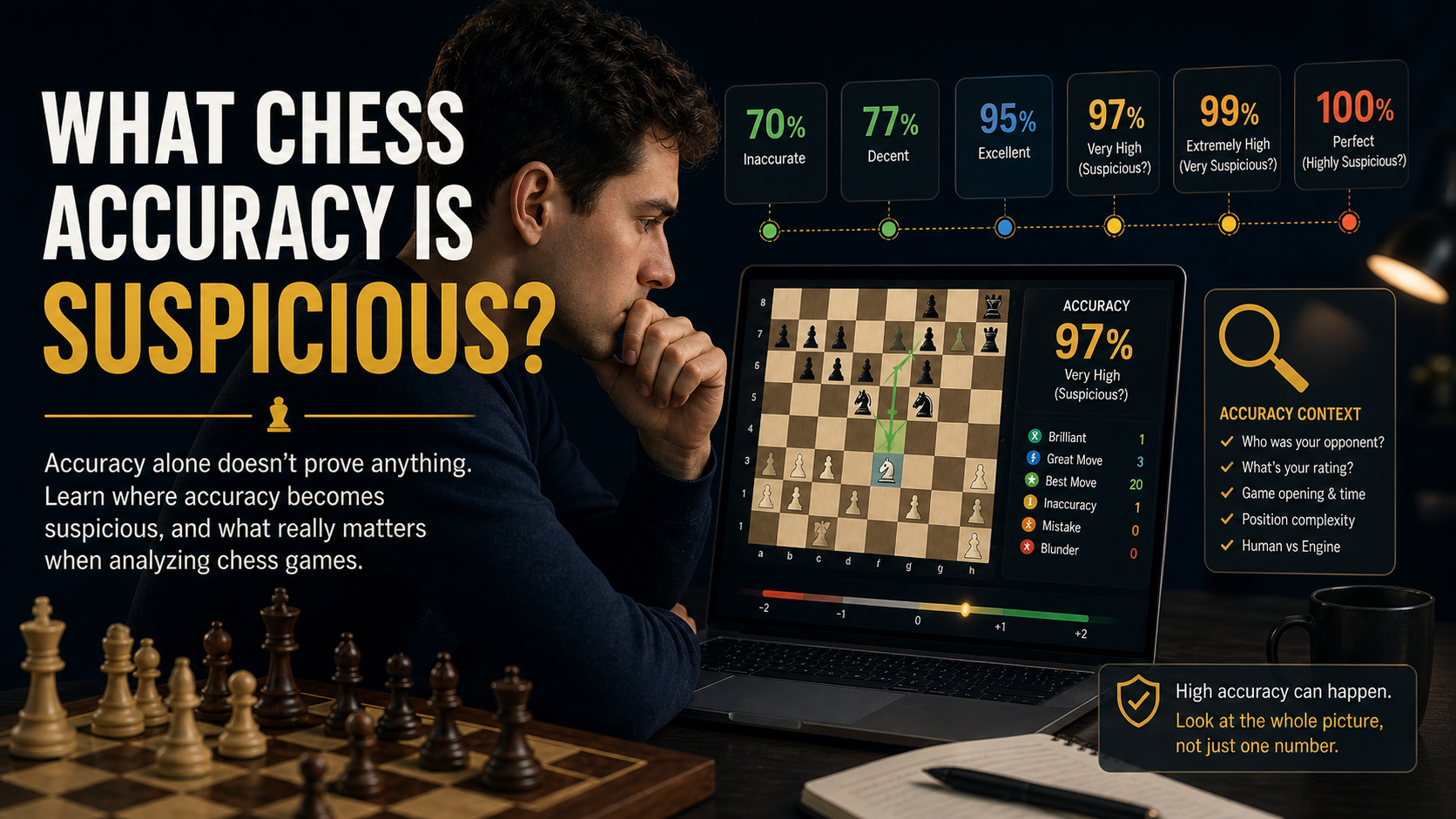
If you have ever lost a game, opened the analysis, and stared at your opponent’s 97%, 99%, or even 100% accuracy, you already know the feeling. The number looks so sharp, so clean, and so final that it seems to answer the whole story in one glance.
But chess accuracy is one of the most misunderstood numbers in the game. Players use it to judge themselves, accuse opponents, compare skill levels, and decide whether a result was “normal.” In practice, that almost always leads to confusion. High accuracy can mean a brilliant game, a very simple game, a very short game, or just a game where the losing side made the choices easy.
That is why the real question is not whether one number looks too high. The real question is what chess accuracy becomes suspicious in context. Once you understand that difference, the whole topic gets clearer. You stop treating accuracy as a moral verdict and start treating it as what it really is: one clue inside a much bigger chess picture.
What chess accuracy is suspicious?
The short answer is simple: no single accuracy percentage proves cheating. A 95% game, a 97% game, a 99% game, or even a 100% game can all happen honestly under the right conditions. Chess.com says directly that accuracy is not cheat detection, and that high accuracy in a single game can happen for many legitimate reasons.
That means there is no magical line where one number is always innocent and the next number is always suspicious. Suspicion starts when the score becomes part of a larger pattern: repeated super-high performances, unusual consistency, strong decision quality in difficult positions, and results that look far beyond the player’s normal level.
This is the idea most players miss when they panic over one screenshot. A single game tells you what happened in that game. It does not tell you the whole truth about the account, the player, or the method behind the moves. That is why a broader framework matters much more than a single dramatic percentage.
What chess accuracy actually measures
Accuracy is best understood as a game-level performance snapshot. It reflects how closely a player’s moves matched strong engine choices in that specific game, not how strong that player “really is” forever.
That distinction matters because players often read accuracy like a rating. They see a huge number and assume the player must have played at engine level throughout the whole game. But that is not how real games work. A player can have one exceptionally clean game without being an exceptionally strong player overall, just as a strong player can have a messy game without suddenly becoming weak.
This is also why accuracy works better as a review tool than as a public accusation tool. When used well, it helps explain how clean or messy a game was. When used badly, it becomes a shortcut for emotional conclusions. If you want to understand chess numbers more honestly, it helps to pair this topic with Is 70 Percent Accuracy Good in Chess? and Is 97% Accuracy Cheating in Chess?, which already break down the practical meaning of different accuracy ranges.
Why context matters more than the number
A 97% game in a 14-move miniature is not the same as a 97% game in a long strategic struggle. A 100% game in a forcing tactical line is not the same as a 100% game in a 60-move battle full of subtle choices. The score alone hides the shape of the game, and the shape of the game changes everything.
Short games tend to produce higher accuracy because there are fewer chances to drift away from the top engine move. Forcing positions also inflate accuracy because the best moves are narrower and easier to find. The same is true in opening-heavy games where theory carries the player through a large chunk of the position.
This is one reason so many public arguments about cheating become silly so quickly. People compare percentages without comparing the kind of game that produced them. In reality, two games with the same final score can be worlds apart in difficulty, resistance, and practical complexity.
If you want to train yourself to read games more clearly, that habit connects closely with How to Stop Losing Winning Positions in Chess and How to Stop Hanging Pieces in Chess: A Complete Anti-Blunder Guide, because both topics depend on understanding where real decision difficulty actually lives in a game.
Is 70 accuracy chess good?
For many beginners and improving players, 70% accuracy is completely normal and often a good sign. Public community estimates suggest that many players in lower club ranges often live somewhere around the 60% to 70% band, while stronger improving players often climb into the 70% to 80% zone.
That is why 70% should not be read as a suspicious number at all. In many practical games, it simply means the player made some inaccuracies but avoided constant collapses. It is often the score of a player who is still learning but no longer throwing every game away with major blunders.
This matters because a lot of people misunderstand the scale. They compare their normal human games with viral screenshots of 98% and conclude that something must be wrong. Usually nothing is wrong. They are just comparing practical club chess with statistical outliers. For a fuller beginner-focused explanation, Is 70 Percent Accuracy Good in Chess? gives the more detailed breakdown.
Is 77 accuracy good in chess?
Yes, 77% is usually a good practical score. It sits in a range that often reflects a stable, reasonably controlled game rather than chaos. Public guides on chess accuracy commonly place 75% to 80% in a band that is decent to solid for many improving and club players.
That means 77% is not remotely the kind of number that should trigger suspicion by itself. If anything, it often suggests the player is reducing blunders and playing with more consistency. In real-world chess, a repeatable run of 77% games can say more about improvement than one isolated 97% spike.
This is one reason accuracy should be read as a trend, not a vanity screenshot. Consistent, healthy scores tell a better story than random peaks. The same lesson shows up in Why Do I Miss One-Move Threats in Chess?, where many so-called “bad games” are really just a few missed tactical moments disguised as a lower overall accuracy number.
Is 95 accuracy cheating in chess?
No. A 95% game is excellent, but it is not automatic proof of cheating. Chess.com explicitly says that high accuracy is not cheat detection and that one high score can happen for legitimate reasons.
A 95% game can occur when the opening is familiar, the position is forcing, the opponent collapses early, or the player converts cleanly without facing many hard choices. That is why a strong one-game number should be treated first as evidence of a strong game, not as evidence of guilt.
What makes 95% more interesting is repetition. If a player produces repeated 95% performances in difficult, non-forcing positions and pairs them with results far beyond their normal level, the pattern deserves more attention. But the key word is pattern, not percentage.
Is 97 accuracy good in chess?
Yes, 97% is an exceptional score. It usually means the player stayed very close to engine-approved choices in that game. That is why the number feels so dramatic.
But exceptional does not mean impossible. A 97% game can happen honestly in short games, tactical sequences, theory-heavy positions, or games where the losing side made the best path straightforward. This is exactly why Is 97% Accuracy Cheating in Chess? has already connected so well with search traffic: it answers a question players ask emotionally, but the honest answer is much more nuanced than they expect.
So yes, 97 accuracy is good in chess. Very good. What it does not mean is that the game was automatically unfair. A single huge score still needs context before it means anything serious.
Is 99 accuracy cheating chess?
A 99% game is the kind of result that instantly grabs attention. It is very rare, very clean, and easy to overreact to. But once again, a dramatic number is not the same thing as proof. Chess.com’s public position remains the same across the board: high accuracy is not cheat detection.
A 99% result can still happen honestly in a short, forcing, or theory-driven game. The problem is not that the number is too high to exist. The problem is that people try to read too much certainty from a single example.
Where 99% becomes more suspicious is when it stops being a special event and starts becoming a recurring pattern. If it keeps happening in hard positions, against real resistance, with unusual consistency, then the larger profile becomes more meaningful. That is when the conversation becomes serious.
Is 100 accuracy cheating in chess?
No. A 100% game is possible, and because it is possible, it cannot be automatic proof of cheating. Public chess guides and community discussions consistently acknowledge that perfect games can happen, especially when the game is short or heavily forcing.
This is one of the hardest points for frustrated players to accept. A perfect score feels supernatural, yet in some games the number of truly difficult choices is very small. A miniature in a forcing line may look “perfect” without actually being superhuman in any meaningful sense.
Of course, 100% becomes more remarkable as the game gets longer and more complex. A perfect score in a tough, balanced struggle is much more unusual than a perfect score in a tactical collapse. But even then, rarity is not the same thing as proof.
What really makes accuracy suspicious
The strongest warning sign is repetition. One huge score is a curiosity. A steady pattern of extreme scores is far more significant. Public discussion around cheating and Chess.com’s fair-play explanation both point away from isolated games and toward improbable consistency across many games.
The second important factor is the type of position. High accuracy in easy, forcing, or short games is less meaningful than high accuracy in long, difficult, strategically demanding positions. That is because hard positions create more room for human variation, and unusually precise play there tells a richer story than a clean miniature does.
The third factor is fit with the player’s normal level. If the score seems wildly disconnected from their usual strength, results, and move quality, the pattern becomes more interesting. That still does not make the case solved. It just means the number is finally being read the right way: as part of a larger profile rather than as a standalone verdict.
This is also why it helps to think of accuracy the way strong players think about blunders. In How to Stop Hanging Pieces in Chess: A Complete Anti-Blunder Guide, the underlying lesson is that one move only makes sense inside a broader process. The same idea applies here. One score only makes sense inside a broader pattern.
Why one screenshot is weak evidence
One screenshot is emotionally powerful and analytically weak. It captures the result of one game without showing game length, position type, theoretical knowledge, the number of forcing moves, or whether the winner was simply converting obvious choices.
That is why screenshot culture creates so many bad conversations in chess. A player loses, sees 97%, gets angry, and assumes the image explains the whole truth. In reality, the image explains almost nothing by itself. It tells you the game was accurate. It does not tell you why.
Serious fair-play logic is much less theatrical than chat arguments. It cares about repeated patterns, improbable consistency, timing, and a wide set of gameplay signals. Chess.com says publicly that its fair-play systems use more than 100 gameplay factors and statistical algorithms to detect highly improbable performance.
What to do if your opponent’s accuracy looks suspicious
The correct response is simple: report the player through the platform and move on. Chess.com says reports trigger review of the player’s recent games, and that its fair-play systems and analysts evaluate much broader evidence than just the post-game score.
That is better than public accusation for two reasons. First, it is more fair. Second, it is more useful. Most players gain nothing from turning one confusing game into a public trial. If the behavior is genuinely suspicious, the platform review process is the correct tool.
At the same time, you should still review the game for your own improvement. Even if a result felt strange, your own decisions on the board still matter. This is where DeepBlunder’s content on How to Stop Losing Winning Positions in Chess, Why Do I Miss One-Move Threats in Chess?, and How to Stop Hanging Pieces in Chess: A Complete Anti-Blunder Guide fits naturally into the same improvement loop.
Use accuracy as a training tool, not a verdict
The healthiest way to use chess accuracy is not to ask whether the number looks suspicious. It is to ask what the number says about the shape of your game.
Did your accuracy fall because you missed one tactical shot?
Did it stay high because the game was simple?
Did it jump because your opponent made the best moves easy?
Did it collapse because one bad decision caused a huge evaluation swing?
Those questions are far more useful than obsessing over the score alone. They turn accuracy from an emotional trigger into a practical training clue. And that is exactly where DeepBlunder’s existing cluster already adds value: Is 70 Percent Accuracy Good in Chess? helps readers calibrate expectations, Is 97% Accuracy Cheating in Chess? answers the most emotionally loaded version of the topic, and Why Do I Miss One-Move Threats in Chess? explains why one ugly tactical miss can distort the whole final number.
If you want to go even deeper into the mindset of practical chess rather than pure numbers, the blog also already covers broader chess thinking and tournament context through pieces like What Is the Stupidest Rule in Chess?, FIDE Candidates 2026: players, storylines, and what matters, FIDE Candidates 2026 Round 10 Pairings, and How the European Individual Chess Championship Works. Those articles broaden the site’s authority around both practical improvement and serious competitive chess.
FAQ
What chess accuracy is suspicious?
No single chess accuracy percentage is automatically suspicious on its own. A 95%, 97%, 99%, or even 100% game can all happen honestly in the right context, especially if the game is short, forcing, or full of obvious moves.
What becomes suspicious is repetition across many games, especially when the performances stay extremely high in difficult positions and seem far above the player’s normal level.
That is why one screenshot after one loss is weak evidence. It shows a result, not a full pattern.
Serious fair-play evaluation looks at much more than the headline number.
The honest answer is that suspicious accuracy is a profile, not a percentage.
That is also why context matters more than outrage.
Is 97% accuracy cheating in chess?
No, 97% accuracy is not automatic proof of cheating. It is an exceptional score, but it can happen honestly in a short game, a forcing line, a theory-heavy position, or a game where the opponent made the correct moves easier to find.
That is the core point behind Is 97% Accuracy Cheating in Chess?, which already explains why one strong score does not settle the fair-play question.
Chess.com’s public fair-play explanation supports the same conclusion by saying directly that accuracy is not cheat detection.
A single 97% game should be read first as “very strong game” rather than “confirmed cheating.”
Only a larger repeated pattern makes the score more suspicious.
That broader view is much closer to how real fair-play systems work.
Is 95 accuracy cheating chess?
No. A 95% game is excellent, but not proof of cheating. It may reflect a clean game, a familiar opening, a forcing position, or a game where the better side converted without facing many difficult choices.
That is why one 95% screenshot should not be treated as a verdict.
The score becomes more interesting only when it appears again and again in hard, non-forcing games with unusually strong outcomes.
Even then, public fair-play logic still depends on a much wider evidence base than one visible percentage.
So the right answer is that 95% is very strong, sometimes noteworthy in a larger pattern, but never automatically cheating by itself.
If you want to read it honestly, always ask what kind of game produced it.
Is 99 accuracy cheating chess?
Not automatically. A 99% game is rare and eye-catching, but rare is not the same thing as impossible. Short, forcing, or theory-driven games can create near-perfect scores without proving engine use.
What matters is whether the score is a one-off event or part of a repeated pattern that looks statistically and practically unusual.
That is the key difference between curiosity and genuine suspicion.
One dramatic number should lead to caution, not certainty.
Repeated dramatic numbers in difficult contexts are much more meaningful.
So 99% is worth noticing, but not enough on its own to settle anything serious.
Is 100 accuracy cheating in chess?
No. A 100% game is possible, and because it is possible, it cannot be automatic proof of cheating. Public guides consistently acknowledge that perfect games can happen, especially when the game is short or heavily forcing.
That does not make 100% ordinary. It makes it context-dependent.
A perfect score in a miniature is much easier to explain than a perfect score in a long strategic fight.
This is why rarity should never be confused with proof.
Even a spectacular number still needs to be interpreted inside the shape of the game and the wider pattern of the account.
That is the only honest way to read it.
Is 77 accuracy good in chess?
Yes, 77% is usually a good practical score for many improving and club players. Public accuracy guides commonly place 75% to 80% in a range that is decent to solid rather than chaotic or weak.
Community rating discussions also make that score look normal for many human games, not suspicious.
This is why players should be careful not to compare healthy everyday scores with sensational outlier screenshots.
A stable run of upper-70s games can be a stronger sign of real improvement than one single 97% peak.
That is also part of the broader lesson in Is 70 Percent Accuracy Good in Chess?, which helps reset unrealistic expectations about what normal chess looks like.
So yes, 77% is often good, and no, it is not a suspicious number by itself.
What should I do if my opponent’s accuracy looks suspicious?
The best response is to report the game through the platform and then move on. Chess.com says reports trigger review of the player’s recent games, and that its fair-play systems use much broader evidence than one visible score.
This is better than accusing people publicly from one screenshot, which is usually weak evidence and often unfair.
It is also healthier for your own chess improvement.
You can report if needed and still review the game to understand your own mistakes.
That combination is much more productive than turning the number into a personal obsession.
If you use the score as a learning clue instead of an emotional verdict, you will usually get more from the game either way.
Conclusions
No single chess accuracy score is automatically suspicious. A 95%, 97%, 99%, or 100% game can all happen honestly, and Chess.com says publicly that accuracy is not cheat detection.
What matters is the larger pattern. Repeated extreme scores, strong play in difficult positions, unusual consistency, and results that do not fit the player’s normal profile are far more meaningful than one screenshot after one painful loss.
That is the right mindset for both fair play and self-improvement. Use accuracy to understand the game, not to replace thinking. And if you want to keep building that understanding, the strongest natural next reads on DeepBlunder are Is 97% Accuracy Cheating in Chess?, Is 70 Percent Accuracy Good in Chess?, How to Stop Hanging Pieces in Chess, Why Do I Miss One-Move Threats in Chess?, and How to Stop Losing Winning Positions in Chess.
From the same category
Keep reading
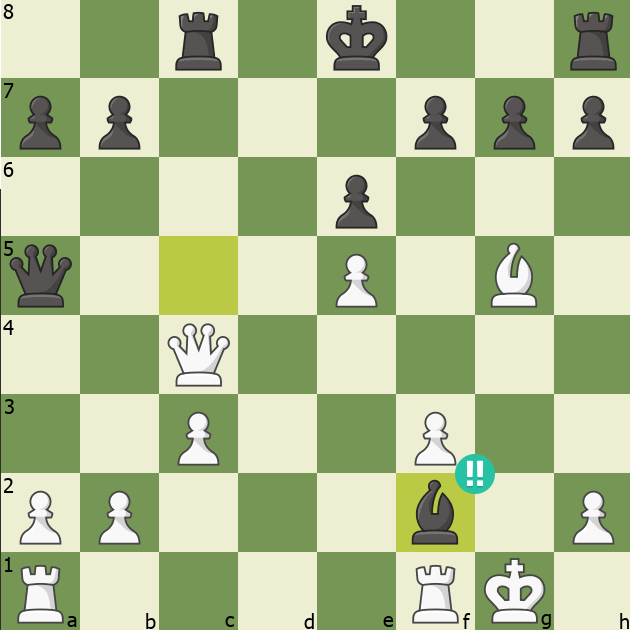
Brilliant Chess Move: Stunning Bishop Sacrifice Led to Checkmate
Most chess players have experienced it at least once. You spot a free pawn, win some material, and feel confident about your position—only to discover that your opponent had seen something much deeper.

Why Your Chess Accuracy Drops After Move 15
If your chess accuracy drops after move 15, the problem is not that you suddenly become a worse player. The problem is that the game has shifted from memory to understanding, and you have not trained that transition enough.
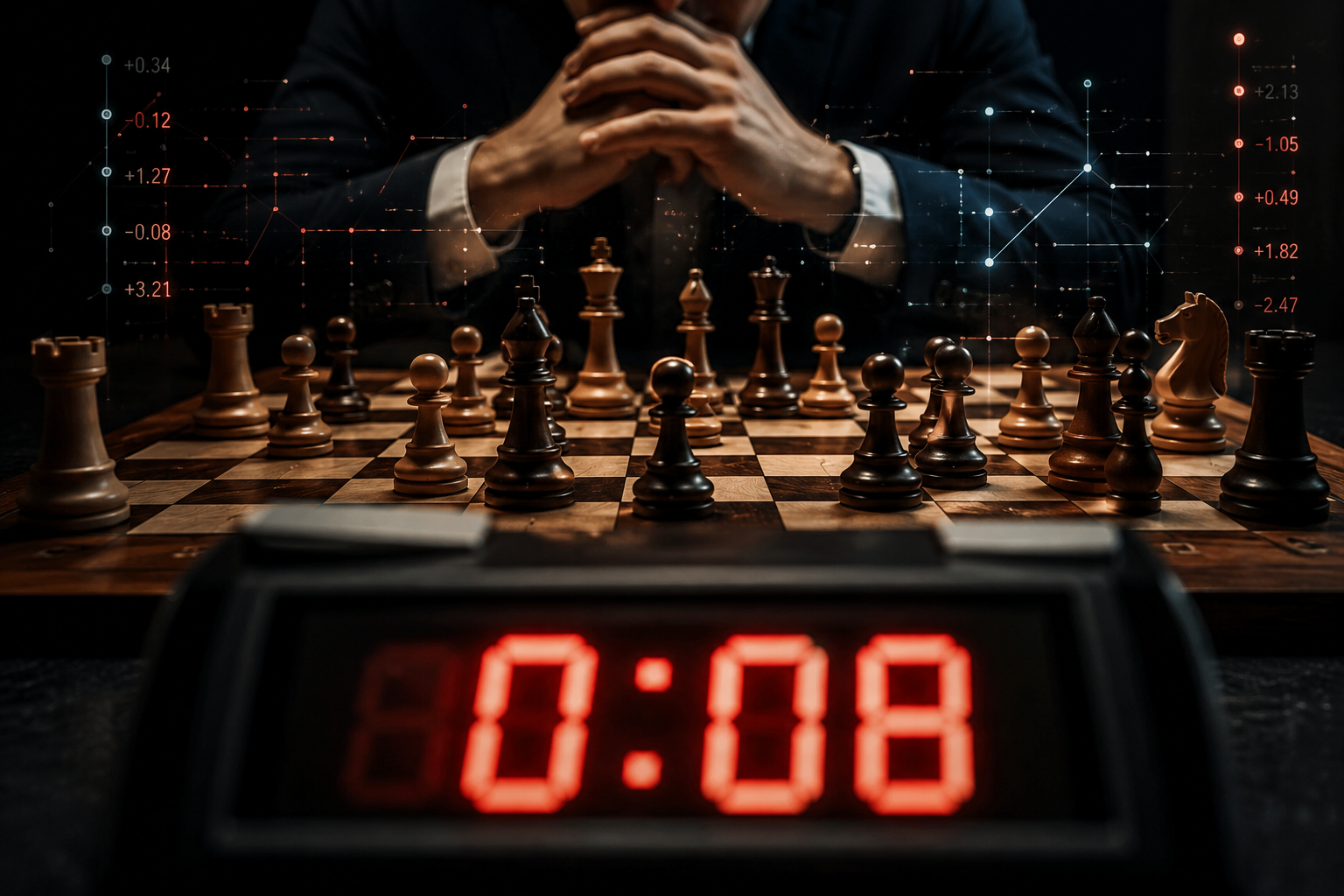
Why You Always Get in Time Trouble (And How Stockfish 18 Fixes It)
Every chess player knows the feeling. You navigate the opening perfectly. You transition into a solid middlegame. You build a completely fine, perhaps even slightly superior, position. And then, you glance at the clock. Your opponent has 15 minutes left. You have 42 seconds. Panic!